


Your home should feel calm, not like a game of Jenga every time you open a cupboard. If clutter is quietly taking over your space, you are not alone. And the good news? With the right home storage ideas and a few smart utilities tricks, every room can feel clean, easy, and actually enjoyable to be in.
What Is Home Storage and Why Does It Matter?
What Is Home Storage and Why Does It Matter?
Home storage is simply the way you keep your belongings neat, safe, and easy to find. It covers everything from your kitchen cupboards to your wardrobe, your utility room to the space under the bed. When storage works well, your home feels bigger and calmer. When it does not work, even a large home can feel chaotic.
Honestly, I used to think storage was just about buying more boxes. Then I moved into a small terraced house in the Midlands and realised very quickly that the problem was not a lack of boxes. It was a lack of a system. Once I had a plan, even a tiny home started to feel comfortable and tidy.
A well-organised home is also better for your mental health. Studies have shown that a clutter-free, organised space can lower stress and help you focus better each day. That is a pretty good reason to sort out those kitchen drawers.
The Smartest Ways to Use Every Inch of Space
The best space-saving trick most people miss is going vertical. Your walls are free real estate. Wall-mounted shelves, floating shelves, and tall shelving units pull items off the floor and free up walking space. Your room looks bigger. Your life feels lighter.
Another idea that changed how I organise my home: using multi-purpose furniture. A storage bench at the end of the bed holds spare blankets. An ottoman in the living room hides toys or board games. A bed with built-in drawers saves you buying a whole chest of drawers. These pieces do two jobs at once, which is smart in any sized home.
Do not overlook the backs of doors either. A few over-door hooks can hold bags, coats, cleaning tools, and more. In a small hallway or bathroom, that can make a huge difference without costing much at all.
Room-by-Room Home Storage Ideas That Actually Work
Kitchen Storage Solutions That Save Time
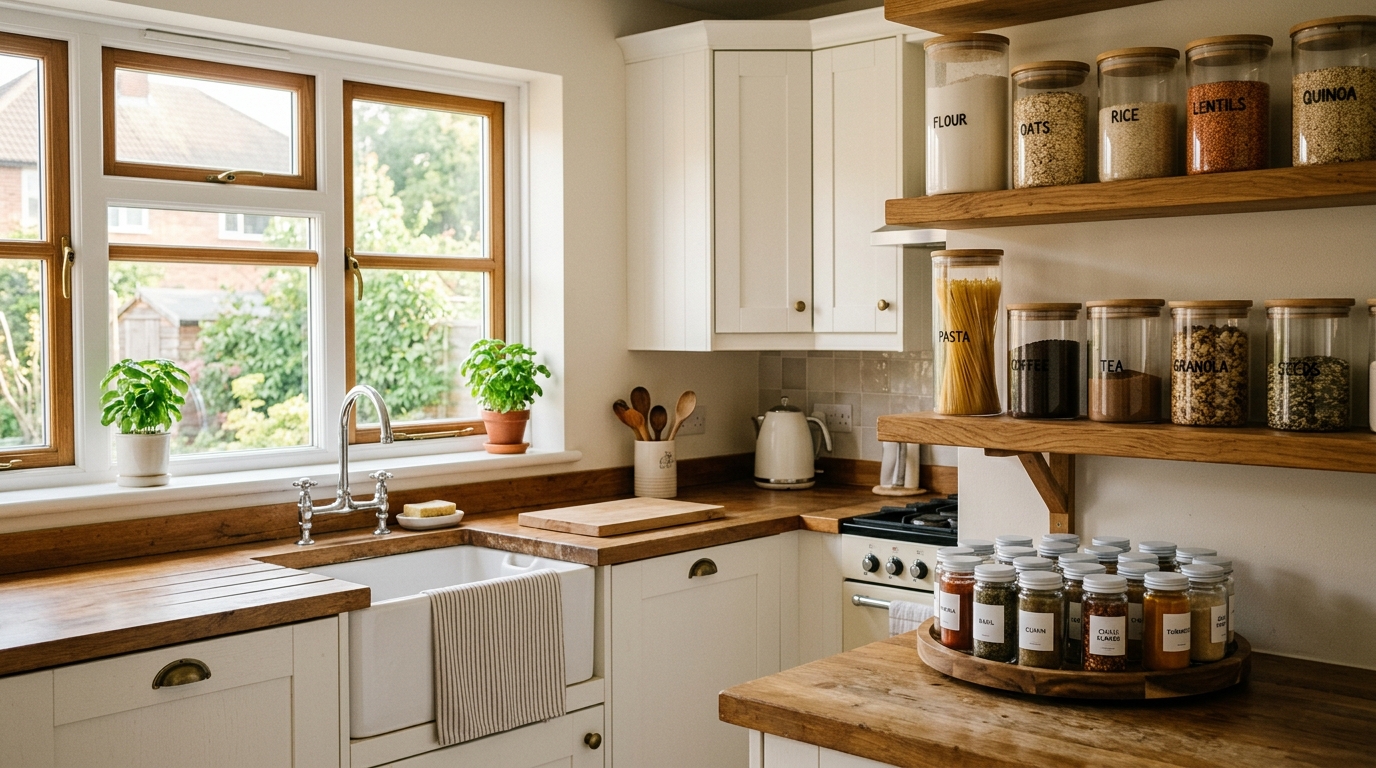
The kitchen is usually the most cluttered room in any home. Pots, pans, food storage containers, spice racks, and cleaning products all fight for the same small space. A few changes can make a big difference fast.
First, group similar things together. Keep all your baking items in one spot. Put cleaning supplies under the sink in a small basket or pull-out organiser. Use drawer organisers inside cutlery drawers so nothing just gets thrown in. It sounds simple but it truly works. When everything has a place, it goes back there without thinking.
A lazy Susan is brilliant for deep cupboards or corner shelves. You spin it and everything comes to you instead of you digging to the back. I have one in my dry food cupboard for tins and jars and it is genuinely one of the best things I ever bought for the kitchen. Clear stackable boxes with labels also help enormously for dry goods like pasta, rice, and cereal.
If you are short on counter space, look up. An under-shelf spice rack mounts to the bottom of any shelf and creates a whole new layer of storage using space that was just sitting empty. Small change, big result.
Bedroom and Wardrobe Storage Tips You’ll Love
I will be honest. My wardrobe used to be embarrassing. Clothes everywhere, shoes piled on the floor, and I still could never find what I needed. The turning point was buying space-saving hangers and adding a tension rod to create an extra hanging layer inside. That one change doubled my hanging space without spending much at all.
Under-bed storage is one of the most underused spaces in any bedroom. Flat boxes on wheels slide under easily and are perfect for seasonal items like winter duvets, extra bedding, or clothes you do not wear every day. Vacuum storage bags are brilliant here too. They compress bulky items like duvets right down, so you can fit far more under the bed than you think.
For smaller items like jewellery, makeup, or accessories, small drawer organisers or stackable trays keep everything visible and easy to grab. When you can see what you have, you stop buying doubles of things you already own. Your purse will thank you for that one.
According to the Self Storage Association UK Annual Industry Report 2025, the UK self-storage industry now covers approximately 64 million square feet of space, with a 7.2% rise in 2024 alone. This shows just how many people across Britain are actively looking for smarter ways to store their belongings.
Utility Room Storage: Make It Work Harder for You
Cleaning Supplies and Laundry Organisation Made Simple
The utility room is often the forgotten hero of the home. It handles the dirty work but rarely gets the love it deserves. A well-sorted utility room means you always know where the washing powder is, the mop does not fall over every time you open the door, and cleaning time takes half as long.
Start with a simple rule: group by job. Put all laundry things together. Washing powder, fabric softener, and dryer sheets can sit in a small basket or on a dedicated shelf right above or beside the machine. All cleaning products go in another spot. Use a tall metal cabinet with adjustable shelves if you have wall space. These are affordable and incredibly sturdy.
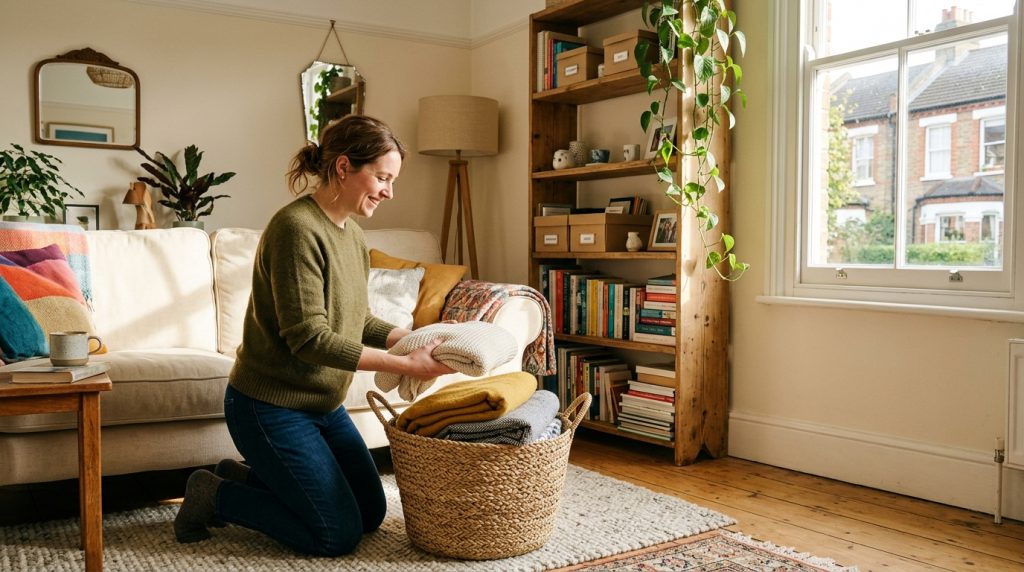
A laundry basket with a lid keeps things looking tidy even when the room is mid-wash. If you have two people in the house, two smaller baskets work better than one large one. You can sort as you go and it saves a job later. A good tip from a friend who works as a professional organiser in Bristol: always keep a labelled basket just for items that need hand-washing. You will not forget them again.
Hallway and Under-Stair Storage Hacks
The hallway is the first thing you and your guests see when they walk through the door. It is also often the most cluttered spot in the house. Shoes pile up. Bags hang everywhere. Letters stack on any flat surface they can find.
A shoe storage bench near the front door solves three problems at once. It gives you a seat to put shoes on and take them off. It stores the shoes neatly inside or underneath. And it acts as a surface for keys and bags. A coat rack or hooks on the wall above it keeps outerwear off the floor. Neat, quick, sorted.
If you have an under-stair cupboard, you are sitting on hidden gold. Most people just push things in and hope for the best. A better approach is to add hooks to the inside walls for tools, brooms, and mops. Add a small shelf unit for shoes or storage boxes. Suddenly that awkward triangular space becomes a proper mini utility room. I did this in my last house and it genuinely transformed the whole ground floor.
Home Storage Trends in the UK for 2025
Sustainable and Eco-Friendly Storage Choices
In 2025, UK shoppers are thinking more carefully about what they buy for their homes. The trend is moving away from cheap plastic and towards natural, long-lasting materials. Seagrass baskets, wicker organiser sets, and solid wood shelving are all very popular right now because they look good, last longer, and are kinder to the planet.
Professional organiser Vicky Silverthorn, founder of You Need a Vicky, pointed out in early 2025 that the focus is shifting to “needs over wants.” People are buying fewer storage products but choosing better quality ones that really do the job. A well-made seagrass basket in a neutral colour works in any room and lasts for years. That is much better value than buying a cheap plastic bin every twelve months.
Preloved storage shopping is also growing in the UK. Sites like Vinted and local Facebook groups make it easy to find solid storage furniture at a fraction of the new price. A second-hand sideboard or chest of drawers from the 1970s is often better built than a flat-pack version today. Worth keeping in mind next time you need a new piece.
According to Which? Storage & Organisation, choosing durable, quality storage products that suit your specific room is key to long-term organisation. Their experts recommend testing for durability and ease of use before committing to any storage solution.
Multi-Purpose Furniture That Does More
This is where smart home storage and good design meet perfectly. UK homes are not always big. Many of us live in terraced houses, flats, or smaller semis where every square metre counts. Multi-purpose furniture is not a new idea but the quality and style of these pieces has improved enormously in 2025.
Look at what a bed with built-in drawers can do. You get the sleeping space and the storage in one item. No need for a separate chest of drawers taking up floor space. An ottoman with a hinged lid holds blankets, pillows, or toys and doubles as a coffee table. A storage bench in the hallway is a seat and a shoe cabinet. The idea is simple: every piece of furniture should do at least two things.
Modular furniture is another trend worth considering. Systems like cube storage units can be arranged however you like and added to over time. You buy what you need now and expand later. That kind of flexibility is really useful if you are renting or if your needs change as your family grows.
Most people think buying more furniture is the solution to a cluttered home. From what I have seen, that is not always true. Buying smarter, more functional pieces almost always works better than adding more stuff to an already busy room.
Conclusion
Good home storage and utilities organisation is not about buying everything at once or having a perfect home. It is about making small, smart changes in each room that add up over time. Start with the space that bothers you most, whether that is the kitchen, the wardrobe, or the utility room, and work from there.
The key things to remember are simple. Go vertical with your storage. Use every inch including the backs of doors and the space under the stairs. Choose multi-purpose furniture that earns its place. Pick quality over quantity, especially in 2025 when sustainable choices matter more than ever.
A tidy, well-organised home genuinely makes daily life easier and calmer. You spend less time looking for things. You feel more relaxed in your space. And you save money by knowing what you already have. I would love to hear which of these ideas you try first. Drop a comment and let me know how it goes.
FAQs
What is the best way to start organising home storage?
Start with one room or even one drawer. Do not try to sort the whole house in a day. Take everything out, decide what to keep, and only put back what truly belongs there. Once you have a clear space, add the right storage solutions like baskets, drawer organisers, or shelving to keep things in order. Small steps done consistently work far better than one big overwhelming sort.
How do I make the most of a small utility room in the UK?
Use every wall. Install adjustable shelves from floor to ceiling if possible. Use hooks for mops, brooms, and cleaning tools. Keep laundry products in clearly labelled baskets on the shelves. A tall metal storage cabinet works brilliantly in a narrow utility room because it takes up very little floor space but offers a lot of storage inside. Group items by job so everything is easy to find.
What are the most popular home storage products in 2025?
In the UK right now, the most popular home storage products include seagrass baskets, cube storage units, under-bed storage boxes on wheels, vacuum storage bags, tension rods for wardrobes, lazy Susans for cupboards, and ottomans with hidden compartments. Natural materials like wicker and solid wood are also very popular because they look stylish and last a long time.
Is multi-purpose furniture worth buying for home storage?
Yes, absolutely. Multi-purpose furniture is one of the best investments for any UK home, especially smaller ones. A bed with built-in drawers, a storage bench for the hallway, or a sideboard in the living room all give you extra organised space without adding extra footprint to the room. They tend to cost a bit more upfront but they save you buying separate storage items later, so they work out cheaper in the long run.
How often should I declutter my home storage?
A good rule is to declutter by season, so roughly four times a year. Each change of season is a natural prompt to check wardrobes, kitchen cupboards, and garages for things you no longer use. A quick 20-minute check every three months is much easier than one big overwhelming clear-out once a year. If something has not been used in six months and it is not seasonal, it is probably time to donate, sell, or recycle it.
