



A small kitchen does not have to feel like a struggle. If you have ever stood in a tiny kitchen and thought there is just no room here, you are not alone. The right architectural solutions can completely change how a small and compact kitchen feels and works. This guide shows you exactly how smart design and custom-built units can turn even the tightest space into something you will love cooking every single day.
Why Small Kitchens Need Smarter Design, Not More Space
Most people think a small kitchen is a problem you fix by moving to a bigger home. That is simply not true.
The real problem is nearly always the design. When a kitchen is fitted with standard off-the-shelf units forced into a space with no real thought, nothing works properly. Cabinet doors open into one another, there is no flow, and the whole thing feels awkward and cluttered.
I have seen this so many times in older UK properties. A kitchen with badly placed cabinets and no clear plan feels chaotic, no matter how large it is. But a well-thought-out compact kitchen layout with the right storage solutions<span style=”font-weight: 400;”> can feel genuinely spacious even in a small cottage.
The secret is to start with the room, not the cabinets.
The Westbury Cottage Problem: What Standard Kitchens Get Wrong
Picture a small Westbury cottage kitchen. Lovely old walls, probably a window over the sink, but incredibly tight on space. The original owners had picked standard units from a shop. Everything was the wrong size. Corners were completely wasted. There was no room to prepare food and open the fridge at the same time.
Sound familiar?
The smartest fix is to flip the whole approach. Instead of starting with the cabinets and trying to fit them into the room, you start with the room and work out how to design a unique kitchen for that specific space that meets all the owner’s needs.
That single change makes a massive difference. It is the difference between a kitchen that genuinely works and one that simply takes up space.
The Best Architectural Solutions for Compact Kitchens
Custom-Built Units: The Most Powerful Tool You Have
This is the big one. When you design custom cabinets, you can make sure there is no wasted vertical space by extending your cabinets all the way up to meet the ceiling. Taller cabinets also create the illusion of a larger space by drawing the eye upward and making the ceiling seem higher.
Off-the-shelf units leave a dusty gap at the top that serves absolutely no purpose. Custom-built units fill every millimetre. They can be built around awkward corners, sloped ceilings, and old cottage walls that are never perfectly straight.
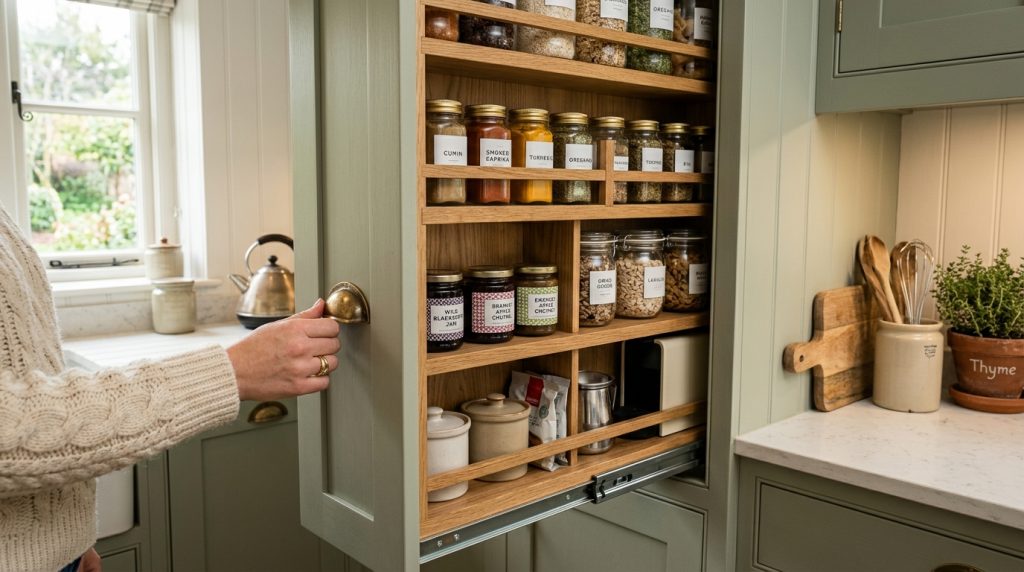
Going for bespoke cabinetry means you can design storage around the things you actually use, rather than starting with standard-sized units and trying to fit all your belongings into them. One example from a real UK cottage project included a beautiful bespoke pantry cupboard with handmade drawers and a spice rack built right into the door. Every single inch is used on purpose.
Floor-to-Ceiling Storage and Vertical Space
Vertical space is the most overlooked space in any small kitchen. Most people think about the floor and the worktop. They forget the walls entirely.
Tall wall accessories and storage units make excellent use of vertical space, freeing up worktops and lower cabinets for more frequently used items. For kitchens with higher ceilings, double-stacking units offer a clever storage solution that creates an impressive amount of storage in a small footprint. Handleless, push-to-open systems work particularly well in these cases, as they help avoid visual clutter and preserve a sleek, modern aesthetic.
In that Westbury cottage, once the floor-to-ceiling cabinets were installed, the kitchen felt twice the size. Nothing had physically changed except where the storage went. Honestly, it was one of those moments where you just stand there and smile.
Smart Layout Strategies That Actually Work
The Single-Wall Kitchen and L-Shaped Layout
For very small rooms, the layout choice matters most. One straightforward solution is a single-wall kitchen, where everything is arranged in a single run against one wall. This works brilliantly in narrow spaces and keeps the work triangle short, meaning you move far less whilst cooking.
According to Plus Rooms, the L-shaped layout is another strong choice for UK homes. An L-shaped kitchen works well in smaller spaces, using two adjacent walls for cabinetry and appliances whilst leaving the rest of the room open for movement. A U-shaped layout can also work well for slightly larger compact kitchens, providing storage and worktop space on three sides and creating a highly efficient cooking area.
Both layouts become far more effective when every unit is custom-sized to the exact room. No gaps. No filler panels. No wasted corners.
The Working Triangle and Compact Appliances
The working triangle, which connects the hob, sink, and fridge, is a cornerstone of modern kitchen design and remains very important in compact areas to keep unnecessary movement to a minimum.
In a small kitchen, you want these three points close but not cramped. Get this right and cooking becomes easy and even enjoyable.
Today’s kitchen appliance market has fantastic options made specifically for small kitchen spaces. This includes slimline dishwashers that reclaim precious worksurface space, combi-ovens that combine microwave and oven functions in one unit, and two-burner hobs designed to free up valuable counter room.
Swapping out a full-size fridge-freezer for a slimline model can free up 30 centimetres or more. That 30 centimetres can become a full pull-out larder unit. Every centimetre counts when you are applying proper architectural solutions for small kitchens.
Creative Storage Solutions for Every Inch
Pull-Out Larders, Corner Units, and Hidden Storage
The corners of a small kitchen are often the most wasted space. Most standard corner units are either hard to reach or simply collect clutter at the back.
Pull-out larders, Le Mans corner units, and carousel systems bring items out to you rather than forcing you to reach into deep, awkward cabinets. Le Mans units are specifically designed to solve the problem of awkward corner spaces. The trays glide smoothly around corners and extend fully, allowing you to access every inch of cabinet space without difficulty.
For the Westbury cottage project, a pull-out corner unit replaced what used to be a completely dead corner. It held enough pans and lids to clear an entire shelf elsewhere in the kitchen. Simple idea. Huge impact.
Toe-kick drawers under the lower cabinets are another clever trick. The toe-kick area is often completely wasted space, yet it can be converted into useful hidden storage with the right custom build.
Multifunctional Surfaces and Fold-Down Features
Every surface in a small kitchen should ideally do more than one job.
Think of a custom kitchen island with built-in storage that doubles as a dining table, or a worktop that conceals a pull-out chopping board. With custom cabinets, you can tailor the storage to meet your needs, from hanging storage for pots and pans to pull-out spice racks.
Even in a tiny kitchen, a small timber island on castors works brilliantly. Sized specifically for the space, it provides storage for pans, gives an extra worktop surface, and can be moved aside easily when you need a bit more room to move about.
That moveable island idea is honestly one of my favourite tricks for small British kitchens. It sounds so simple but it genuinely changes how a space works day to day.
How Colour, Light, and Finishes Open Up Small Spaces
Light Colours and Reflective Surfaces
Colour is a free tool that most people underuse in compact kitchen design.
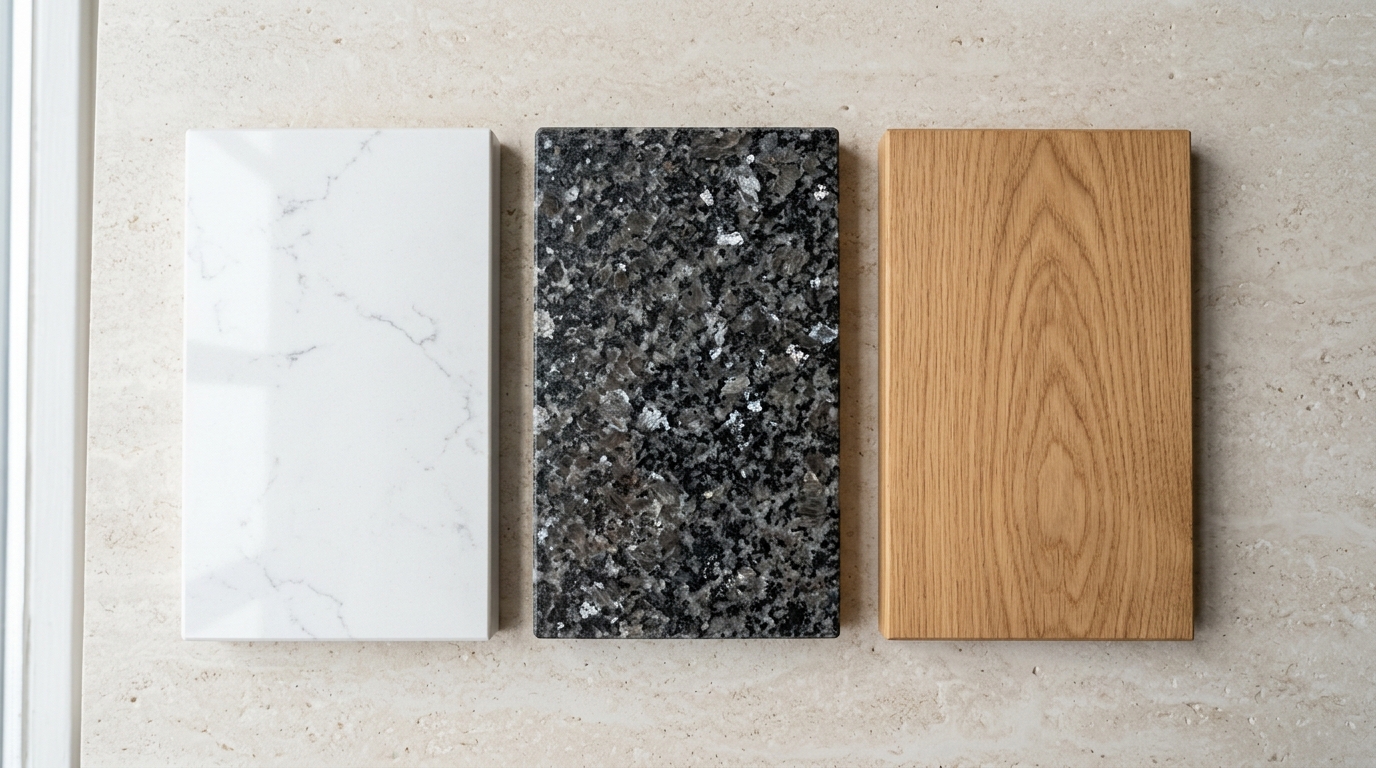
Lighter colours are particularly suited to smaller kitchens as they create a sense of openness, making the room appear larger than it actually is. Soft shades of white, cream, pale grey, or light pastels help reflect natural light, giving the illusion of space. Neutral tones such as Cashmere or Antique White provide warmth and sophistication without closing the room in.
Glossy cabinet doors, pale worktops, and light tiles all bounce light around the room. The kitchen does not get physically bigger, but it feels like it does. That feeling matters a great deal in a small space.
When designing custom cabinets for a compact kitchen, choose colours and finishes that create a brighter, airier mood. A sleek, clean aesthetic without too much ornamentation makes a small kitchen feel larger and more inviting.
Natural Light and Window Placement
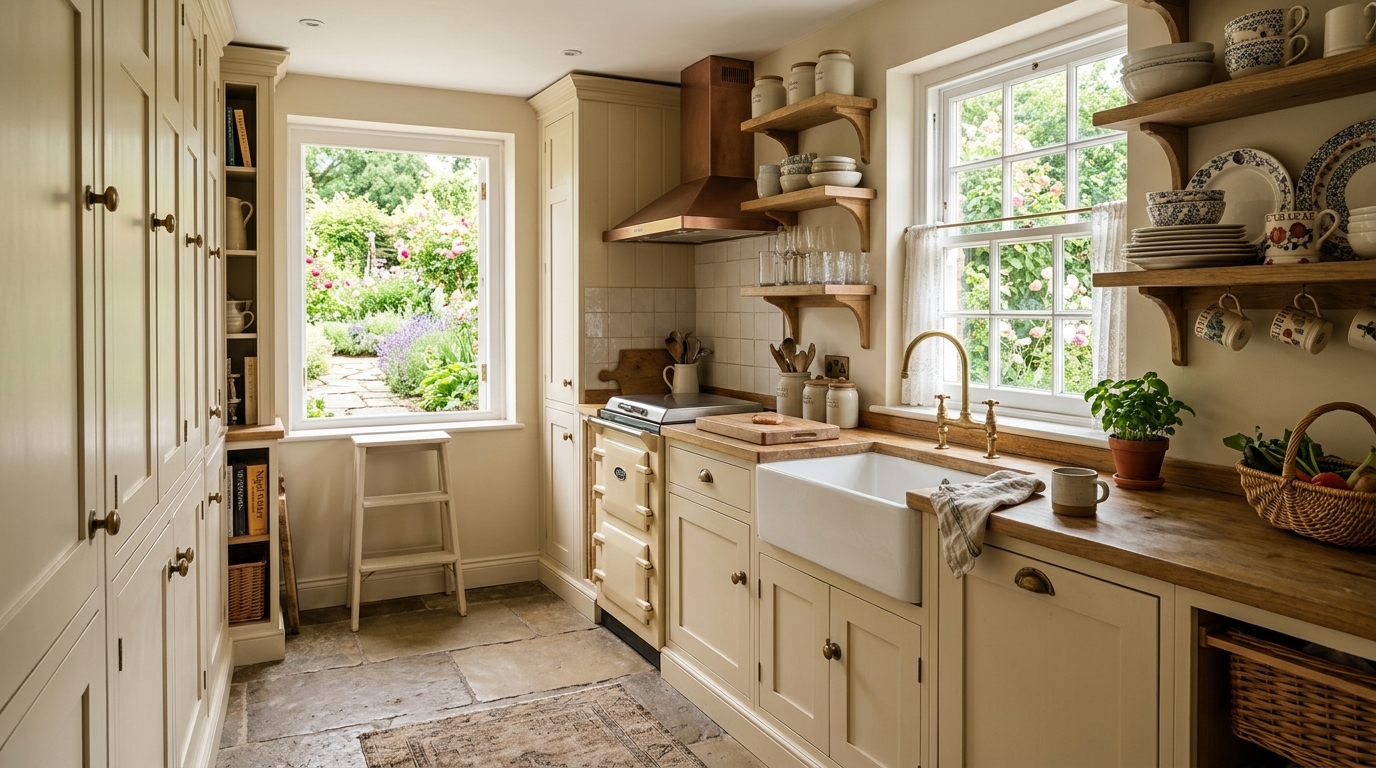
Installing a butler sink under the window means the working area of the kitchen is bathed in natural light and feels connected to the outdoors.
This is a small but very powerful detail. Natural light makes any space feel more generous.
In the Westbury cottage, the window above the sink was the star of the whole room. Combined with pale bespoke cabinetry and a clean layout, the kitchen felt genuinely welcoming. Not like a tiny box, but like a proper kitchen that someone truly loves.
Glass-fronted cabinet doors are another clever trick. They break up the visual weight of solid cabinetry, allow you to display attractive items, and give the kitchen a more open feel without changing anything structural.
Why Custom-Built Units Beat Off-the-Shelf Every Time in Small Kitchens
Precision Fit for Irregular Spaces
Old British cottages are not square. Walls lean. Ceilings slope. Chimney breasts eat into corners. Standard units just sit there looking wrong, leaving odd gaps that gather dust and make the whole kitchen feel unfinished.
Compact kitchens demand more than basic storage solutions. They require every element to justify its presence through genuine utility whilst maintaining visual harmony. Success depends on vertical maximisation, intelligent integration, and strategic material choices that create depth without adding visual weight.
Unlike mass-produced kitchen ranges, bespoke kitchen cabinet makers focus on precision, artistry, and full customisation. Every cabinet, drawer, and cupboard is handcrafted to fit your space and lifestyle seamlessly.
Every awkward angle in that Westbury cottage became a feature rather than a problem. A low ceiling became an excuse for a gorgeous tall pantry with a stepped top. Nothing went to waste.
Long-Term Value and Quality
Custom-built kitchens cost more up front. That is true. But they are built for your exact space and your exact life.
Each drawer, shelf, and corner unit is designed with real purpose, maximising functionality and eliminating clutter. The cabinets are built to last and represent a high-quality cabinetry solution that genuinely stands the test of time.
A well-made bespoke kitchen in a small cottage also adds real value to the property. Most people are surprised to learn just how much a thoughtfully fitted small kitchen can lift the appeal and value of a period property when it comes to selling.
Conclusion
A small kitchen is not a limitation. It is an invitation to think more cleverly.
Architectural solutions for small and compact kitchens work best when you start with the space you have and build everything around it. Custom-built units, smart vertical storage, thoughtful layouts, the right compact appliances, and light, clean finishes all work together to turn even the tightest kitchen into something functional and genuinely beautiful.
The Westbury cottage showed exactly that. What started as an awkward, cluttered little room became a genuinely joyful place to cook. All it took was the right plan and units made to fit the actual space.
If you are working with a small kitchen right now, do not just buy whatever fits on the shelf. Think about the space first. Then build around it.
I would love to hear how your own small kitchen project goes. What is the one change that made the biggest difference for you?
Frequently Asked Questions
What are the best architectural solutions for a small compact kitchen in the UK?
The best solutions include custom-built units made to fit the exact room, floor-to-ceiling cabinets to use vertical space fully, smart corner storage such as Le Mans units, pull-out larders, and compact appliances. Starting the design from the room rather than from standard units makes the biggest difference, especially in older British properties with irregular walls and sloped ceilings.
How do custom-built units maximise space in a small kitchen?
Custom-built units are made to the exact measurements and shape of your kitchen, including awkward angles and sloped ceilings common in UK cottages. They leave no wasted gaps, use every inch of vertical space, and can include clever features like built-in spice racks, pull-out shelves, toe-kick drawers, and hidden storage that standard off-the-shelf units simply cannot offer.
What is the best layout for a compact kitchen?
The single-wall layout and the L-shaped layout both work very well in small British kitchens. Both keep the work triangle short, which means less movement whilst cooking. The right choice depends on the shape of your room, but both become far more effective when combined with bespoke cabinetry built precisely for the space.
Can a small kitchen look bigger without major building work?
Yes. Using light, neutral colours, glossy finishes, and reflective surfaces all create the illusion of more space. Making the most of existing natural light helps enormously too. Keeping worktops clear and choosing handleless cabinet doors with push-to-open systems gives a cleaner, more open feel without knocking down any walls or carrying out any structural work.
Are custom-built kitchen units worth the cost in a small space?
Absolutely. In a small kitchen, every centimetre matters, and standard off-the-shelf cabinets are simply not designed for the odd shapes and tight spaces common in British homes. Bespoke kitchen units are built around your specific room, which means better storage, better flow, and a kitchen that genuinely works for how you actually live. The upfront cost is higher, but the long-term value in both daily use and home resale value makes it well worth it.
