

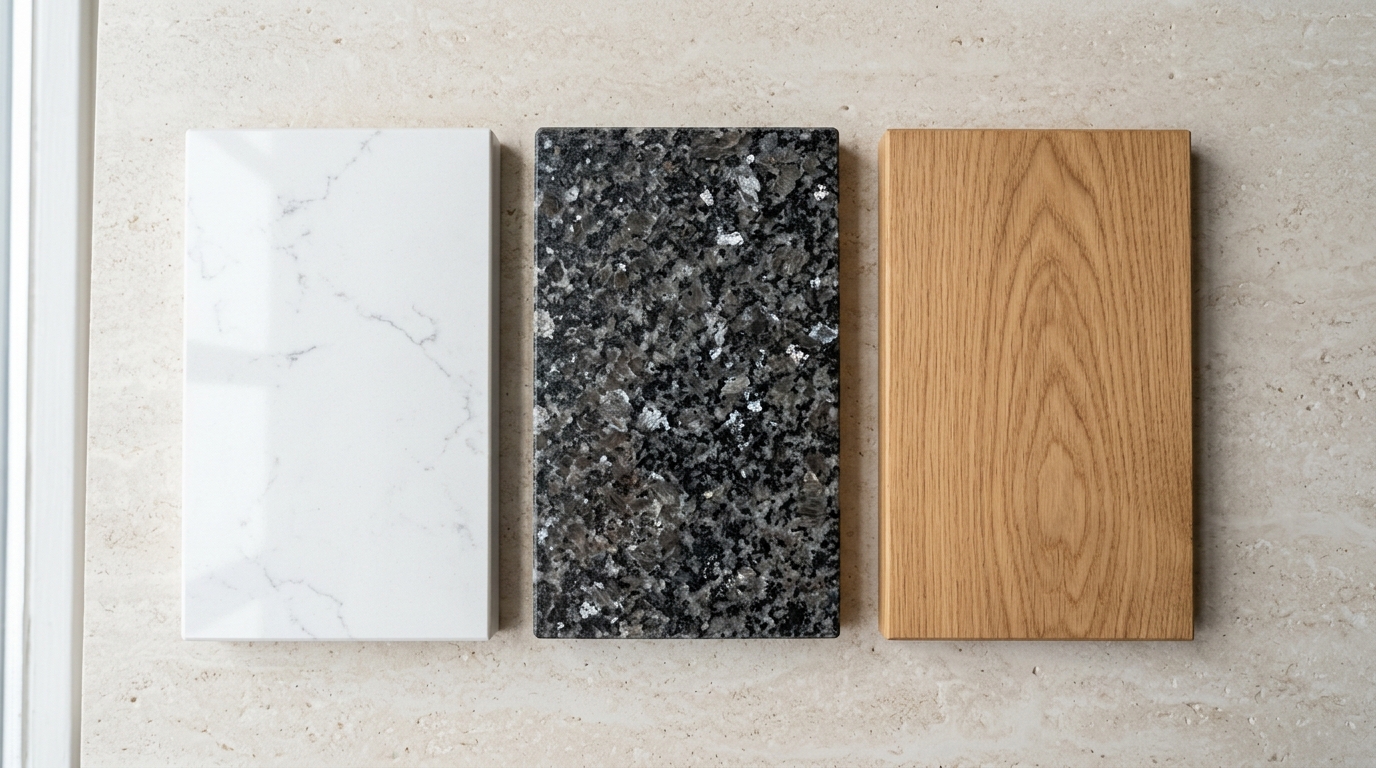


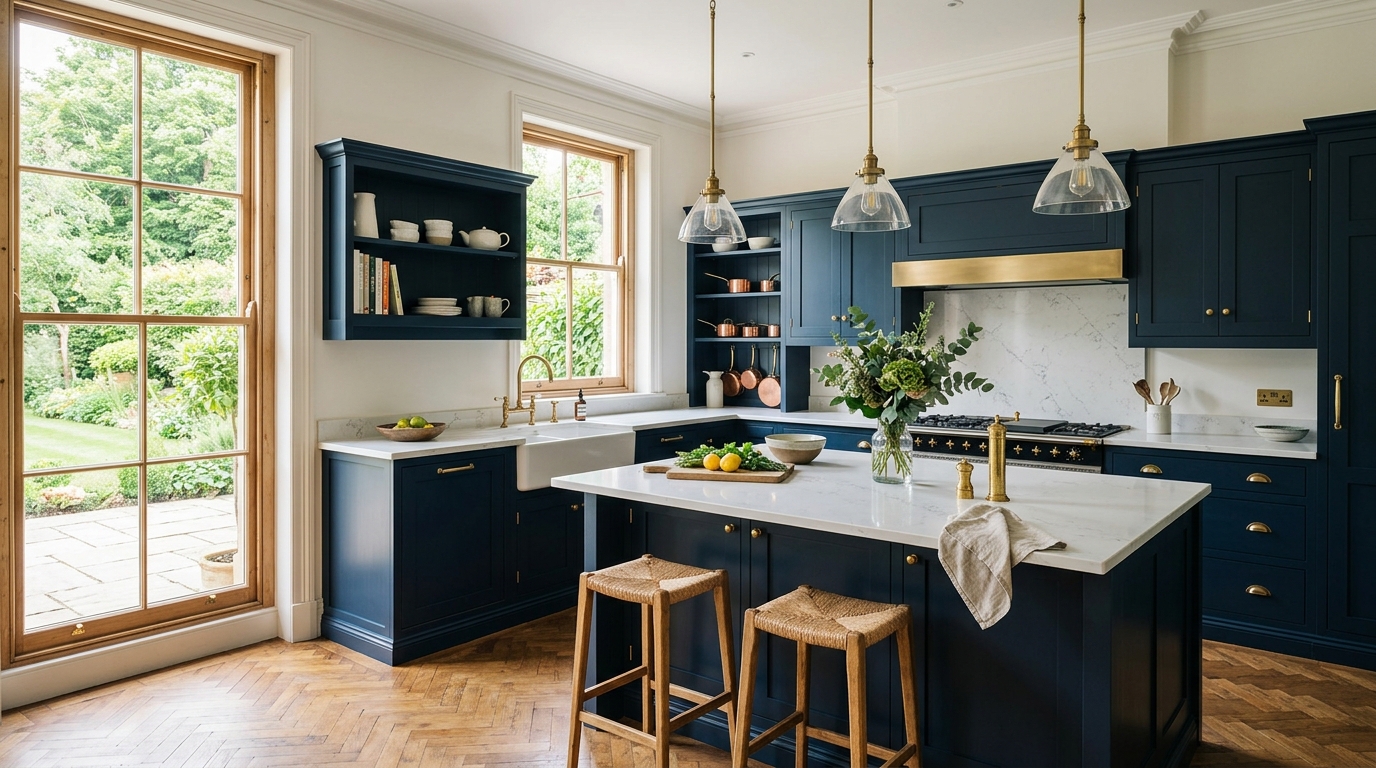
Your kitchen worktop takes more punishment than almost any other surface in your home. Hot pans, sharp knives, spilled tea and everyday mess all land right on it. So when you are spending serious money on a luxury fitted kitchen, picking the wrong surface hurts twice as much. Quartz, granite and solid wood are the three most popular premium choices in the UK right now. Each one looks brilliant. But they behave very differently. Let me help you figure out which one actually fits your life.
What Is a Luxury Kitchen Worktop?
What Makes a Worktop “Luxury”?
Not every expensive worktop is truly “luxury.” The word gets used a lot by showrooms and suppliers. But a real luxury kitchen worktop is one that looks beautiful, feels high quality and still works brilliantly after years of daily use.
Quartz, granite and solid wood worktops all qualify. They cost more than laminate or cheaper alternatives. But they also last far longer and look far better. Think of them as a smart, long-term investment in your property.
The three things that define a luxury worktop surface are durability, a professional finish and how well it holds up to real kitchen life. If a material scores well on all three, it earns its place in this group.
Quartz Worktops: Clean, Consistent and Low Fuss
I remember helping a friend choose her worktop during a kitchen renovation a few years back. She loved the look of granite but was worried about the upkeep. After a long chat, she went with quartz. A couple of years later, she still sends me photos every time a guest compliments the kitchen.
Quartz is an engineered stone. It is made by mixing around 90 to 95 percent natural quartz crystals with resins and pigments. The whole mix is pressed together under high heat and pressure to create a very dense and strong slab.
Because it is manufactured this way, quartz is completely non-porous. That means no tiny gaps where water, oil or bacteria can sneak in. You can clean it with just soap and water. No need to seal it. No special products needed at all. For a busy household, that is a massive everyday win.
It also comes in a huge range of colours and patterns. You want a soft white with grey veining that looks like marble? No problem. You want a solid charcoal tone that works with dark cabinetry? Easy. The consistent finish makes it simple to match with any kitchen design, from traditional Shaker styles to sleek handleless kitchens.
One real downside worth knowing: quartz does not like very hot pans placed straight on it. The resin can be damaged by sudden heat, which is called thermal shock. Always use trivets. It is a small habit that protects a big investment.
How Each Material Handles Heat and Scratches
Granite’s Natural Strength in the Kitchen
Granite is 100 percent natural stone. It forms deep underground over millions of years from cooling molten magma. It is made from minerals including feldspar, mica and quartz crystals. Every single slab looks different. No two pieces are ever identical.
That uniqueness is what many homeowners love most about it. You are getting a genuinely one-of-a-kind surface. The natural stone patterns, the mineral flecks, the deep colour variations are completely real and unrepeatable.
When it comes to handling heat in a busy kitchen, granite is one of the best materials available. You can place a hot pot or pan directly on it without damage in most everyday situations. Its heat resistance is genuinely impressive and a clear advantage over quartz.
Scratch resistance is also strong. A sharp knife dragged across granite will usually leave no mark at all, thanks to its extremely hard crystalline structure. The one thing to watch is its porous nature. Without sealing, liquids like red wine, cooking oil or lemon juice can soak in and cause staining. A simple annual sealing routine sorts this completely. You clean the surface, leave it to dry thoroughly for 24 hours, apply the sealant and you are done for another year.
Quartz and Wood Under Daily Pressure
I once watched a friend put a hot cast iron skillet straight onto his brand-new quartz worktop by accident. He forgot the rule in a rush. The surface was left with a faint, dull patch near one edge. He was genuinely gutted about it. That moment always comes to mind when someone tells me quartz is indestructible.
Every material has its limits. Quartz handles daily scratch resistance brilliantly. Normal chopping, food prep and kitchen activity will not mark it. But heat resistance is its real weakness when compared to granite. Keep trivets and heat mats within reach at all times.
Solid wood worktops are a completely different experience. Hardwoods like oak, maple and walnut feel warm and natural underhand. They are strong. But they do scratch more easily than stone and they absorb water if spills are left sitting on them.
Here is the good news though: wood can be repaired. Light scratches can be sanded away. Stains can be treated. A coat of fresh worktop oil and the surface looks almost new again. Most stone worktops cannot offer that. Once quartz is badly chipped, the repair is difficult and often needs a professional. With solid wood, a bit of sanding and refinishing brings it back to life. For many people in the UK, that ability to restore a surface yourself is a major selling point.
The downside is that wood does need regular oiling to stay in good condition. Without it, the surface dries out, can shrink and may crack over time. This is especially true for wood worktops fitted near the sink or hob.
Maintenance: Which Material Is the Easiest to Care For?
Sealing, Oiling and Daily Cleaning
This is the part most people do not think enough about until they are already living with their new kitchen. And then it becomes very important very quickly.
Quartz takes the least effort by far. A quick wipe with soap and water is all it needs day to day. No annual sealing. No specialist cleaning products. For a family home in the UK where people are cooking and cleaning constantly, this is a genuine quality-of-life benefit.
Granite needs slightly more attention. For everyday cleaning, use a pH-neutral cleaner and a soft cloth. Never use bleach, harsh chemicals or abrasive pads. These can damage the surface finish or break down the sealant over time.
Once a year, you need to reseal your granite worktop. There is an easy test to know when it is time. Pour a small amount of water onto the surface and watch what it does. If the water starts soaking straight in rather than sitting on top in a bead, it is time to reseal. It is not a hard job, but you do need to plan for it.
Solid wood takes the most regular care of all three. It needs oiling every two to three months in the first year. After that, once or twice a year is usually enough for most hardwood surfaces like oak or walnut. Spills need to be wiped up quickly. Leaving water sitting on wood is one of the easiest ways to cause damage.
If you have a wood worktop fitted near the sink, make sure it has been installed correctly with proper drainer grooves and sealed edges. Done properly, wood near a sink works very well. Done poorly, it becomes a problem fast.
It is also worth knowing that many UK suppliers now offer sustainably sourced wood for solid wood worktops. Choosing timber certified by the Forest Stewardship Council means the wood comes from responsibly managed forests, which is better for the environment and something growing numbers of UK homeowners are actively looking for.
Long-Term Care Costs You Should Know
Over years of use, the total cost of keeping a worktop looking good does add up. Quartz is the most affordable to maintain long term. You are really just spending on everyday cleaning products you already buy anyway.
Granite requires yearly sealant, which costs a modest amount. If it chips or cracks badly, granite repairs need a professional using colour-matched resin. It is not something you can easily fix at home.
Wood can often be fixed yourself with some sanding and fresh oiling. This keeps long-term costs lower than you might expect and gives you real satisfaction when you see the surface restored.
When working out your overall budget, always include professional installation costs. All three materials need skilled fitters. Stone worktops especially require experienced professionals because they are very heavy and the cuts around sinks and hob openings must be exact. Getting this right matters enormously for both the look of the finished kitchen and how long the surface lasts.
Style and Design: Making Your Kitchen Look Premium
Colours, Patterns and Edge Profiles
I once spent a good twenty minutes in a kitchen showroom just staring at a large Calacatta quartz slab. The white base, the flowing soft veining, the way light moved across it. It genuinely looked like a piece of art. I completely understood why it is one of the most popular worktop choices in UK homes right now.
Quartz gives you the most design control. Because it is engineered, you can get it in almost any colour. You can match it precisely to your cabinetry, your tiles or the rest of your kitchen scheme. The consistent finish means what you see in the showroom is exactly what arrives in your kitchen. That makes planning and design decisions much easier.
Granite offers something completely different. Its natural stone patterns are bold and interesting. Depending on the type of stone, you might find flecks of gold, deep black mineral crystals or rich green tones running through it. The colour variations create real depth and character in a room. If you want a kitchen surface that feels truly one-of-a-kind, granite delivers something no engineered stone can replicate.
Solid wood worktops bring warmth that stone simply cannot match. The grain patterns of oak<span style=”font-weight: 400;”>, walnut or maple create a cosy, inviting feel that suits farmhouse kitchens, country-style fitted kitchens and even modern designs beautifully. A wood worktop on a kitchen island or breakfast bar adds texture and warmth next to stone or painted cabinetry in a way that feels natural and considered.
Edge profiles matter more than most people realise before they visit a showroom. A clean waterfall edge on quartz looks sleek and modern. A rounded or bullnose edge profile on granite feels more classic and substantial. Getting the edge detailing right pulls the whole kitchen design together in a way that is hard to explain but immediately obvious when you see it done well.
Mixing Worktop Materials for a Unique Look
One of the best things you can do in a high-end fitted kitchen is use more than one material. This might sound risky at first, but it actually looks stunning when done thoughtfully.
The most popular approach is to use quartz or granite for the main prep surfaces and the areas around the hob and sink, then add a solid wood worktop on the kitchen island or breakfast bar. Stone gives you the hygiene and durability exactly where you need it most. Wood gives you warmth and character in the spot where people gather, sit and chat.
Mixed materials are a growing design trend in luxury UK kitchens. It adds texture and depth to the space without feeling cluttered or overdone. It also lets you enjoy the best qualities of two very different surfaces in the same room at the same time.
Price Guide: What to Budget for Each Material
Where Your Money Goes
Price is always one of the first questions people ask. The honest answer is that the final cost depends on many factors. The worktop thickness you choose, the edge profile, the colour of the material and how complex the installation is will all affect what you pay.
According to data from Which? and the Building Cost Information Service (BCIS), quartz and granite materials cost on average around £800 and £850 respectively for a standard 5m² worktop at 600mm depth, though prices vary by colour, finish and supplier.
Solid wood worktops often have a lower starting price than stone. But do not forget to factor in worktop oil, sanding supplies and potentially professional refinishing over the years. The total cost of ownership is higher than it looks on a first quote.
Professional installation is required for all three materials. Stone worktops are particularly heavy and need precise cuts around sinks, hob cutouts and corners. Getting this done properly matters enormously for how the finished kitchen looks and how long the worktop surface lasts.
Always ask for a full, itemised quote. Ask for the material cost, cutting charges, edge profiling, delivery and fitting all listed separately. That way there are no nasty surprises when the bill arrives.
Does Your Worktop Choice Add Property Value?
The short answer is yes. A luxury kitchen worktop can genuinely make buyers willing to pay more for your home.
Any experienced estate agent will tell you that kitchens sell houses. A beautiful granite or quartz worktop is often one of the first things buyers notice and comment on during a viewing. It signals quality and care. It tells buyers the home has been looked after well.
UK estate agents often quote a property value uplift of 4 to 8 percent for a good quality new kitchen, and the worktop is one of the most visible and impactful parts of that renovation. A well-executed kitchen upgrade, including a quality worktop, can typically recover 50 to 80 percent of the investment when the home is sold, and may attract buyers more quickly, reducing the time the property sits on the market.
Granite has long been associated with high-end UK homes and luxury kitchen design. Quartz is now equally desirable and seen as a premium material that adds clear resale value. A beautifully fitted solid wood worktop on a kitchen island can also impress buyers who love natural, warm materials and the character that comes with them.
Conclusion
Choosing between quartz, granite and solid wood comes down to three things: how you cook, how much upkeep you are happy to take on and what kind of look makes you smile every time you walk into your kitchen.
If you want something easy to clean, consistent in colour and low effort to maintain, quartz is the smart, practical pick for a busy UK household. If you love the idea of a truly unique surface straight from nature and do not mind a bit of regular upkeep, granite is hard to beat. And if warmth and natural character matter most to you, solid wood brings something no stone can copy.
You do not have to choose just one. Use quartz or granite near your hob and sink, and add a wood worktop on the island for warmth and personality. The kitchen is the heart of the home. It deserves a worktop that looks great and works hard every single day.
What material are you leaning towards? I would love to hear your thoughts in the comments below!
Frequently Asked Questions
Is quartz better than granite for a UK kitchen worktop?
It depends on what matters most to you. Quartz is non-porous, easy to clean and needs no sealing at all. Granite handles heat better and has a completely natural look that no two slabs share. If low maintenance is your top priority, quartz wins. If you love natural stone beauty and do not mind an annual sealing routine, granite is an excellent choice for a UK home.
Can I put hot pans directly on a granite worktop?
Yes, granite handles heat very well. It is one of its strongest advantages over quartz. You can place hot pots and pans on granite without damage in most everyday situations. That said, it is always sensible to use trivets to protect any worktop surface and keep it looking its best over the long term.
How often does a wood worktop need oiling in the UK?
A solid wood worktop should be oiled every two to three months during the first year. After that, once or twice a year is usually enough for hardwood surfaces like oak or walnut. Always use a food-safe worktop oil for any surface used in food preparation, and wipe up spills quickly to avoid water damage.
Which kitchen worktop material is the easiest to maintain?
Quartz is the easiest to maintain day to day. It only needs soap and water for regular cleaning and requires no annual sealing at all. Granite needs a pH-neutral cleaner and yearly sealing. Solid wood needs regular oiling and quick clean-up of any liquid spills to stay in great condition.
Can I mix quartz and wood worktops in the same kitchen?
Absolutely, and it is a very popular choice in UK luxury fitted kitchens. Many homeowners use quartz or granite for the main prep surfaces near the sink and hob, and solid wood on the kitchen island or breakfast bar. It is a practical and stylish combination that gives you durability where it matters most and warmth and character where people gather.
