


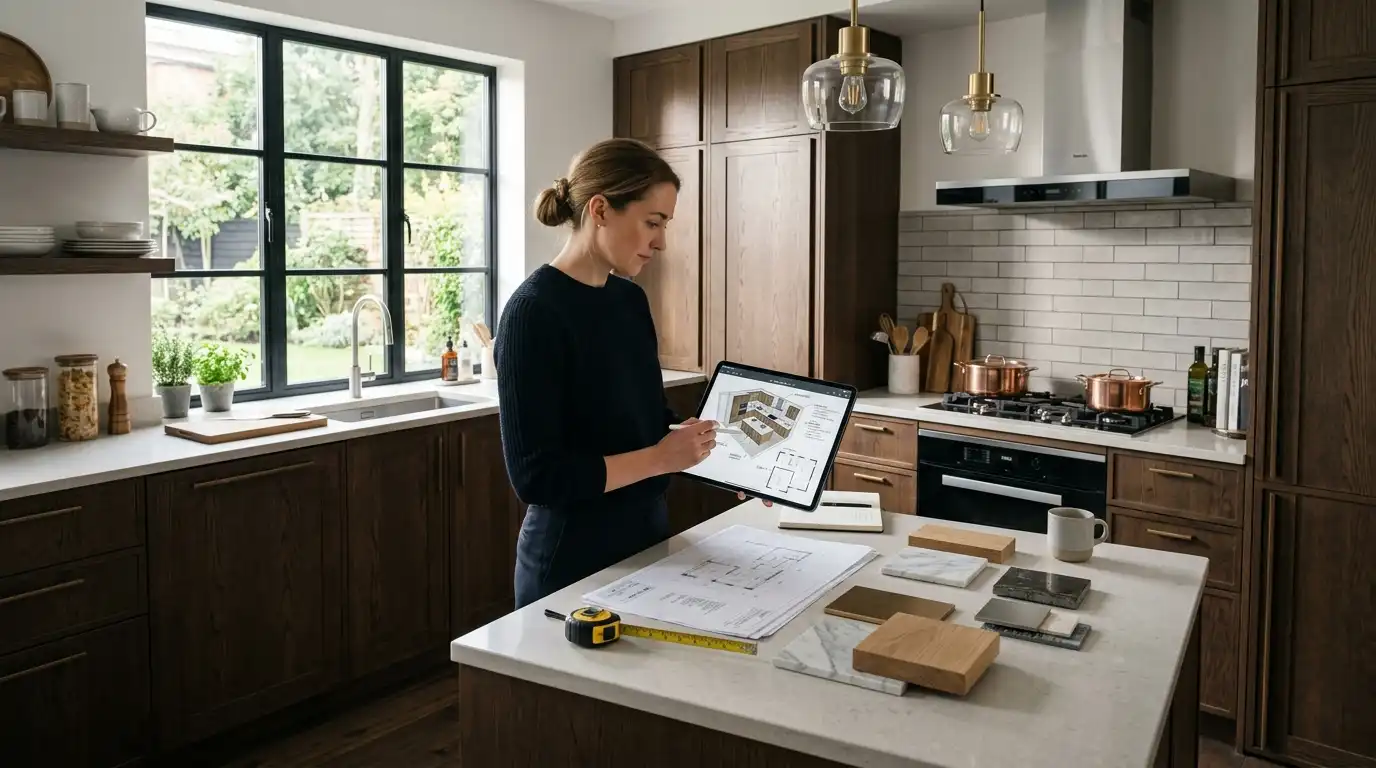
Architectural kitchen planning is the process of designing a kitchen using precise measurements, layouts, and technical tools before a single cabinet is installed. It’s not just about making things look nice. It’s about making sure everything fits perfectly, works smoothly, and suits the style of your home.
Think of it like building with a blueprint instead of guessing. A professional starts by studying your space, including the walls, windows, doors, plumbing points, and electrical outlets. Then they create a full plan on paper or in CAD software before anything gets built.
Why It Is Called a “Science”
Honestly, the word “science” might sound fancy. But when you see how much math and planning go into a good kitchen layout, it makes sense. Designers look at things like the kitchen work triangle, which is the distance between your sink, stove, and fridge. They check the clearance space between counters. They measure cabinet heights to match the people who will use the kitchen every day.
It’s not guesswork. It’s careful, step-by-step planning that makes daily cooking easier and safer.
How CAD Design Works in Kitchen Planning
What CAD Software Actually Does
CAD, short for computer-aided design, is a tool that lets designers draw a kitchen on a screen with exact measurements. Instead of sketching on paper, a professional uses software like AutoCAD, 2020 Design, or SketchUp to create a detailed 2D floor plan and a 3D model of your future kitchen.
I once watched a kitchen designer work on a project for a Victorian terrace house in the UK. She typed in the room’s exact dimensions, and within minutes, we could see the whole kitchen in 3D on the screen, including the cabinetry layout, appliance placement, and even how natural light would fall through the window. It was honestly impressive.
The 3D visualization lets you see your kitchen before it’s built. You can try different countertop materials, change cabinet colors, or move the island to see if it fits better. This saves time and money because you catch problems early, not after the builder has already installed everything.
From 2D Drawings to 3D Models
The process usually starts with a 2D technical drawing. This is a top-down view of the kitchen showing walls, doors, windows, and where each element will go. Then the designer switches to 3D rendering so you can see it from eye level, as if you’re standing inside the kitchen.
According to a study shared by the National Kitchen and Bath Association (NKBA), 78% of homeowners rely on professional designers or contractors to ensure quality outcomes when remodeling a kitchen. That number tells you something. Most people understand that getting the plan right from the start matters a lot.
Period Homes vs Modern Homes: Why the Difference Matters
Planning a Kitchen for a Period Home
A period home, like a Victorian terraced house or a 1920s craftsman bungalow, comes with its own set of challenges. The walls might not be perfectly straight. The ceilings may be higher than standard. There could be alcoves, chimney breasts, or original features that you don’t want to remove.
This is where architectural kitchen planning really shows its value. A professional designer will measure every corner, every angle, and every bump in the wall. They will then design custom cabinetry that fits the space exactly, not a generic cabinet that leaves an odd gap at the end.
Good CAD tools can detect wall angles and odd shapes automatically, making sure every element fits without cutting corners, literally. For period homes, this kind of precision means the kitchen looks like it belongs there, not like it was just dropped in.
Planning a Kitchen for a Modern Home
Modern homes usually have cleaner lines and more regular shapes. But that doesn’t mean planning is easier. Open-concept layouts, large kitchen islands, and integrated appliances all need careful thought.
For example, a kitchen island might look great in a showroom. But if the clearance around it is less than 42 inches, two people can’t work in the kitchen at the same time without bumping into each other. CAD design catches this before the island is ever delivered.
A good designer also thinks about the work triangle in modern kitchens. The sink, stove, and fridge should all be within easy reach of each other. When this triangle is right, cooking feels effortless. When it’s wrong, you’ll feel it every single day.
Common Kitchen Layout Styles and How CAD Helps Each One
The Most Popular Kitchen Shapes
Every kitchen has a shape, and each shape works best in certain homes. Here are the four main ones you’ll come across:
U-shaped kitchens wrap around three walls. They give you loads of counter space and storage. They work best in medium to large kitchens and are great for people who love to cook.
L-shaped kitchens use two walls that meet at a corner. They’re flexible and work well in open-plan homes where the kitchen flows into the living or dining area. The corner creates a natural work triangle.
Two-row or galley kitchens place two rows of cabinets facing each other. They’re efficient and great for families who cook together. You need enough space between the rows for movement.
Single-row kitchens run everything along one wall. They’re perfect for small apartments or people who prefer a clean, minimal look.
Why CAD Makes Layout Decisions Easier
Before CAD design, choosing a layout was often a guess. You’d imagine how it might look, measure a few things, and hope for the best. Now, a designer can try all four layouts on screen, compare them side by side, and show you which one works best for your space.
CAD blocks, which are pre-made digital shapes of cabinets, appliances, and fixtures, make this process fast. A designer can drag a fridge into place, test if the door swings open without hitting a wall, and adjust the position in seconds. That kind of precision planning used to take hours.
The Installation Stage: How CAD Plans Make Fitting Easier
From Screen to Reality
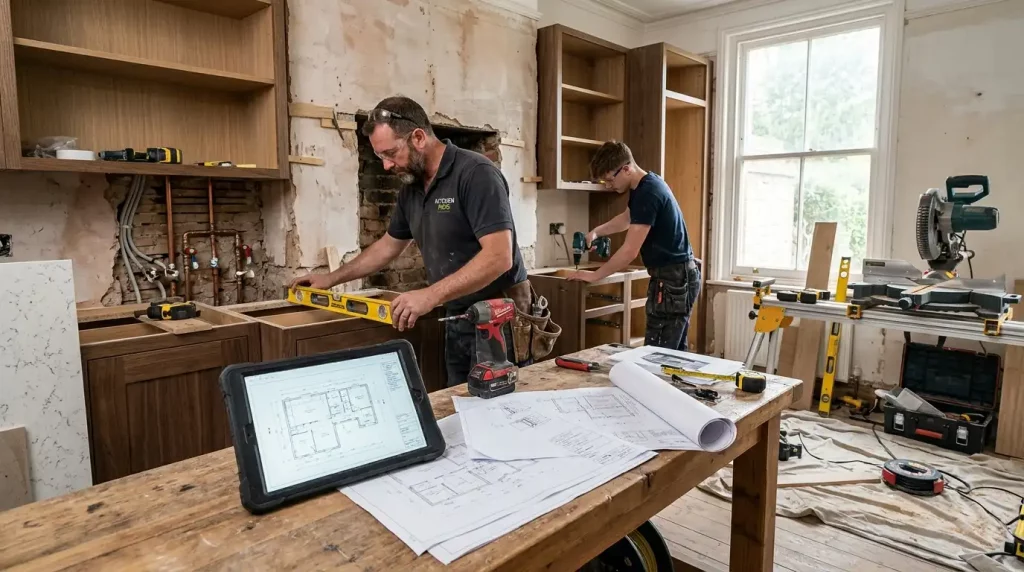
Once the design is approved, the CAD drawings become the construction guide. Builders and installers use these drawings to know exactly where every cabinet goes, where the plumbing connections are, where the electrical outlets should be placed, and what the exact measurements are for each unit.
Good kitchen construction drawings include things like cabinet widths, counter depths, worktop heights, clearance areas, and utility positions. All of this information is on the drawing before the first cabinet arrives at your door.
This matters a lot for period homes where walls might be uneven. If the drawings are accurate, the installer can prepare custom solutions in advance rather than discovering problems on installation day.
Reducing Errors and Saving Money
Here’s something most people don’t think about: mistakes during installation are expensive. If a cabinet doesn’t fit, you might need to return it, reorder, and wait weeks. If the plumbing isn’t in the right spot, a plumber needs to come and move it.
CAD-based planning reduces these errors significantly. Designers have reported a reduction in project timelines by up to 30% when using CAD tools, because problems are fixed on screen, not on-site. That means less stress, less wasted time, and less money spent on fixing avoidable mistakes.
According to a report by the American Institute of Architects (AIA), detailed pre-construction drawings are one of the most effective ways to reduce installation errors in residential projects.
What to Expect When Working With a Professional Kitchen Designer
The Process Step by Step
Working with a professional kitchen designer is a lot smoother than most people expect. Here’s what usually happens:
First, the designer visits your home and takes exact measurements of the space, including walls, windows, doors, and any existing features. Then they ask about your lifestyle, how often you cook, how many people use the kitchen, and what kind of style you like.
Next, they create the first CAD design and show you a 3D visualization. You’ll be able to see different layout options, cabinet styles, countertop materials, and lighting setups. You can give feedback and the designer adjusts the plan in real time.
Once you’re happy with the design, the final construction drawings are created. These go to the kitchen fitter, the electrician, and the plumber. Everyone works from the same plan, which means far fewer surprises.
Questions Worth Asking Your Designer
When you sit down with a kitchen designer, it’s smart to ask a few things. Ask how they handle uneven walls in period homes. Ask whether the design includes full 2D and 3D CAD drawings. Ask if the plan includes electrical and plumbing positions. And ask what happens if something doesn’t fit on installation day.
A good designer will have clear answers to all of these. If they’re working only from sketches and no proper CAD software, that’s worth knowing before you sign anything.
Conclusion
Architectural kitchen planning is not just a nice-to-have. For both period homes and modern homes, it’s the difference between a kitchen that fits beautifully and one that causes problems for years. Professional CAD design gives you exact measurements, smart layouts, and a clear picture of your kitchen before any work begins. It saves money, reduces mistakes, and makes the whole installation process smoother. Whether your home is a Georgian terrace or a brand-new build, getting the planning right from the start is always worth it.
Frequently Asked Questions
What is the difference between architectural kitchen planning and regular kitchen design?
Regular kitchen design often focuses on style and looks. Architectural kitchen planning goes deeper. It uses precise measurements, technical CAD drawings, and professional tools to make sure the kitchen fits perfectly in the space, works safely, and suits the structure of the home. It looks at things like wall angles, load-bearing structures, and utility positions.
How does CAD design help with period homes specifically?
Period homes often have irregular walls, uneven floors, and unusual architectural features. CAD software allows a designer to map all of these precisely and create a kitchen plan that fits the actual space, not a standard template. This means custom cabinet sizing, smart use of alcoves, and a result that looks like it belongs in the home.
Do I need a professional for kitchen planning or can I do it myself?
You can use basic online tools to sketch ideas. But for a full kitchen fit, especially in older or complex homes, a professional makes a big difference. They catch problems that are easy to miss, like a cabinet door that swings into a walkway, or a fridge that blocks natural light. The 2024 NKBA report found that 78% of homeowners used a professional for kitchen projects, and for good reason.
How long does the professional kitchen planning process take?
It depends on the size and complexity of the project. A straightforward modern kitchen plan might take one to two weeks. A period home with custom cabinetry could take three to four weeks for the design phase alone. The installation then follows once the plan is approved and materials are ordered.
What are the most important things to include in a kitchen CAD plan?
A good CAD kitchen plan should include exact room dimensions, cabinet positions and sizes, appliance placements, the kitchen work triangle, clearance spaces, lighting positions, plumbing connections, and electrical outlet locations. The more detail in the plan, the smoother the installation will be.
