


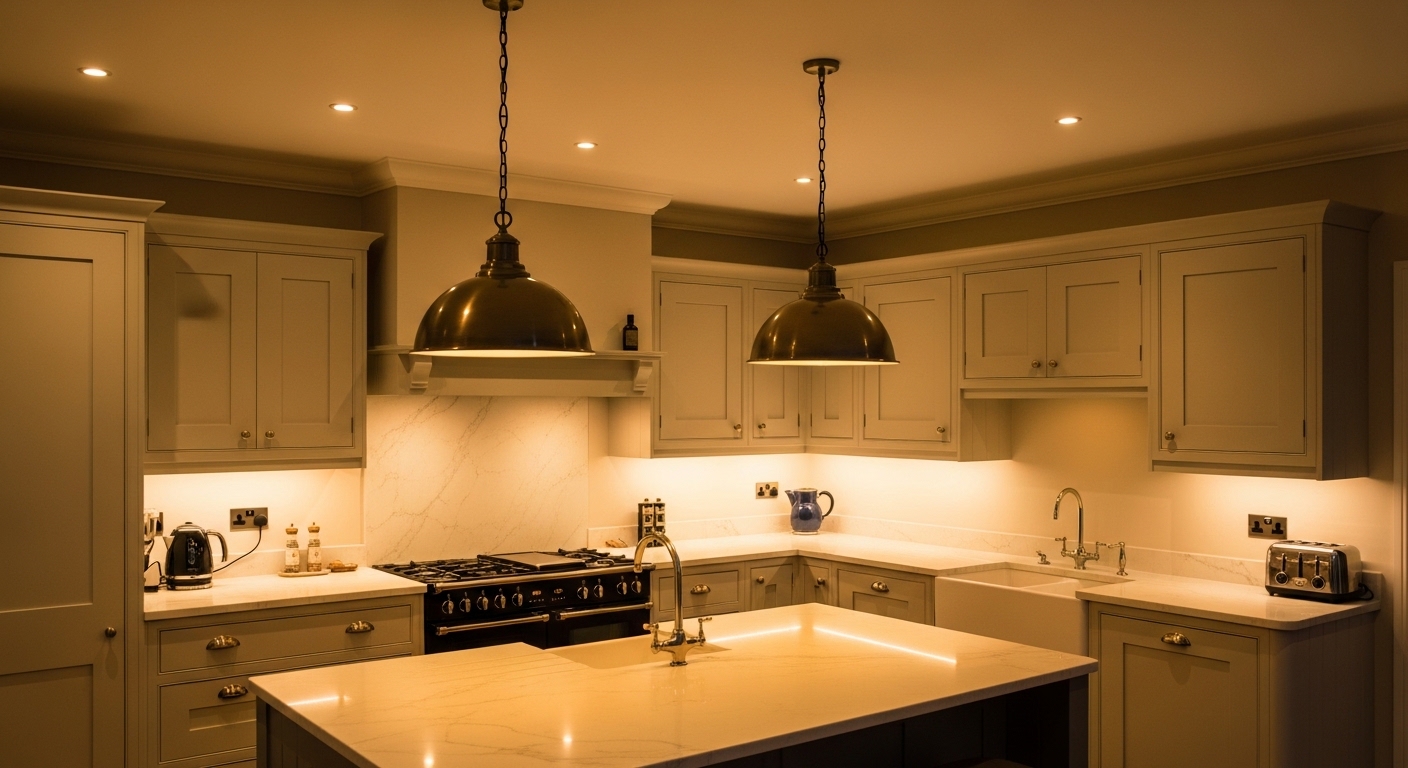
Good professional kitchen lighting can completely change how your kitchen feels to live in. One light in the wrong spot and suddenly your worktop is full of shadows, your food looks dull, and the whole room feels cold and uninviting. I have seen this happen in so many British kitchens, even beautifully designed ones with lovely cabinetry and expensive finishes. The fix is not just adding more lights. It is about choosing the right lights and placing them in the right spots using three key layers: task lighting, mood lighting, and feature lighting.
When these three work together properly, your kitchen stops being just a functional room and becomes a space you genuinely love spending time in, whether you are making a Sunday roast or having friends over for a dinner party.
Why Layered Kitchen Lighting Matters More Than You Think
Most people fit one big ceiling light and consider the job done. Honestly, that is the single biggest lighting mistake in British homes. A single overhead fitting creates harsh shadows right where you need to see most clearly, such as your worktops, sink, and prep areas.
Layered lighting solves this properly. It means using different light sources at different heights and angles so that every part of your kitchen gets the right type of light for what you are doing there. According to guidance published by the Energy Saving Trust, switching to LED lighting with a well-planned layout can reduce your lighting energy use significantly while delivering far better light quality throughout the home.
The three layers are straightforward: task lighting for work areas, ambient lighting for general brightness, and accent lighting for style and character. Each one does a different job and none of them should be left out of a well-thought-out scheme.
What Is Task Lighting and Where Do You Need It?
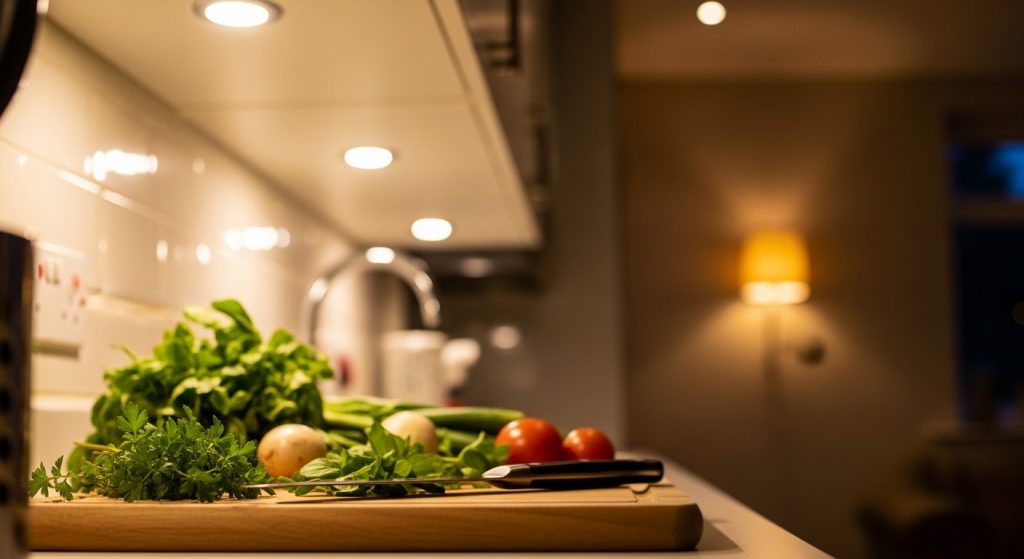
Task lighting is the most important layer in any kitchen lighting scheme. It gives you focused, bright light exactly where you are working. When you are chopping vegetables, following a recipe, or washing up, you need clear, shadow-free light directly on that surface. Not dim. Not soft and scattered. Clear and direct.
The key spots for task lighting in a UK kitchen are your worktops, kitchen island, hob, and sink. The most popular choice is under-cabinet lighting. These lights sit beneath your wall units and shine straight down onto the work surface below. They cut out the shadows that a ceiling light creates when your own body blocks it from above while you are standing at the worktop.
I remember fitting LED strip lights under the wall cabinets in my own kitchen a few years back. It felt like someone had switched the whole room on properly for the first time. Everything looked cleaner, more inviting, and cooking actually became more enjoyable. A small change with a surprisingly big impact.
Pendant lights hung over a kitchen island also work really well for task lighting. They bring the light down much closer to the surface rather than shining from a distance above. For best results, hang them roughly 75 to 90 centimetres above the worktop surface and use 3000K to 3500K bulbs for that crisp, clear light that is ideal for detailed work.
Mood Lighting: Setting the Right Atmosphere in Your Kitchen
How Ambient Lighting Creates a Comfortable Kitchen Feel
Ambient lighting is the base layer of any good scheme. It fills the whole room with soft, even light and makes moving around the kitchen safe and comfortable. This is the kind of light that makes your kitchen feel warm and welcoming, especially on grey British winter evenings when natural daylight disappears by mid-afternoon.
Recessed downlights spaced evenly across the ceiling are the most common way to achieve good ambient lighting in a modern UK kitchen. They spread light without cluttering the visual space, which keeps the room looking clean and unobtrusive. For a warm, cosy feel, choose 2700K to 3000K warm white bulbs. For a brighter, more contemporary finish, something closer to 3500K works well.
The real trick to great mood lighting is dimmer switches. With a dimmer fitted, your kitchen can shift from sharp and bright during morning prep to soft and relaxed during a midweek supper or a weekend gathering. The Chartered Institution of Building Services Engineers (CIBSE) notes that dimmable lighting controls are among the most effective tools for creating flexible, energy-efficient home environments that adapt to different times of day and different needs.
Using Dimmers and Colour Temperature to Control the Mood
Colour temperature changes how a room feels to be in. Warm light around 2700K feels cosy and settled. Cooler light closer to 4000K feels sharp and energising. In a professional kitchen lighting plan, you want access to both depending on the time of day and what you are doing.
The clever approach is to keep your task lights at a slightly cooler setting so you can see your ingredients and worksurfaces clearly. Then put your ambient and accent lights on a warmer setting to create a relaxed atmosphere when you are not actively cooking. When you dim the main downlights in the evening and let the warm under-cabinet lighting glow softly across the worktop, the kitchen shifts into a completely different mood without changing a single fitting.
Most people do not realise how much colour temperature affects how they feel in a room. It is not only about brightness. Warm light signals to your brain that it is time to wind down. Cooler light keeps you alert and focused. Use that to your advantage when planning your kitchen lighting scheme from the start.
Feature Lighting: Highlighting the Best Parts of Your Kitchen
Accent Lighting That Adds Drama and Character
Feature lighting, or accent lighting, is the enjoyable part of the process. This is where you can be a bit creative. It does not make the whole room brighter overall, but it adds depth, personality, and visual interest. It draws the eye towards the parts of your kitchen that deserve attention.
Glass-fronted cabinet lighting is one of my personal favourites. When you add small LED puck lights or strips inside a glazed cabinet, your crockery and glassware become part of the room’s character. It looks considered and tasteful without costing a fortune. This kind of detail is very popular in current British kitchen design.
Toe-kick lighting is another excellent feature option. These are small LED strip lights positioned at the base of your floor units. They create a soft glow along the floor that looks really striking in the evenings. They also serve as a practical nightlight if you come downstairs for a cup of tea in the middle of the night. Useful and attractive at the same time.
For accent lighting to stand out properly, it needs to be at least three times brighter than the surrounding light in that area. A good ratio is 3:1, or even 5:1 if you really want to create a strong focal point. This contrast is what produces the sense of drama and depth.
Using Pendant Lights and Statement Fittings as Feature Pieces
Pendant lights are one of the simplest ways to add a real design statement to a kitchen. They hang over your kitchen island or breakfast area and serve two purposes at once: they provide focused light and they act as a visual centrepiece that ties the room together.
The style you choose says a great deal about your kitchen’s personality. Industrial-style black metal pendants give a bold, contemporary look that suits many modern British homes. Rattan or woven pendants feel relaxed and natural, which works beautifully in country-style or Shaker kitchens. Glass globe pendants keep things light and airy in a smaller space. Whatever your kitchen’s character, there is a pendant to suit it.
Chandeliers in a kitchen might sound overly grand, but even a modest multi-bulb chandelier above a kitchen table or island can completely lift the feel of the room. It adds height, a sense of occasion, and real character.
I once helped a friend update her kitchen lighting in a Victorian terraced house in Leeds. She kept all her existing ceiling fittings but added warm LED strips beneath the wall units and two brushed brass pendants over the island. The kitchen looked completely transformed and she spent less than £150 in total. Good feature lighting does not have to involve a major budget or a full refit.
Planning Your Professional Kitchen Lighting Layout
How to Layer All Three Types of Lighting Correctly
Start with task lighting first because this layer has the biggest impact on how usable your kitchen actually is day to day. Get your under-cabinet lights, island pendants, and sink lighting sorted before you think about anything else.
Then move on to your ambient lighting. Space your recessed downlights evenly across the ceiling and make sure they cover the whole room without leaving dark corners. Fit dimmer switches on this circuit so you have full control of the atmosphere later on.
Finally, layer in your feature or accent lighting. This covers your toe-kick strips, cabinet interior lights, splashback lighting, and any statement fittings. Think of this last step like the finishing touches on a well-put-together room. It completes the scheme and makes the whole space feel intentional rather than thrown together.
A useful approach for UK kitchens is to plan in lighting zones. Your cooking zone around the hob, your prep zone along the main worktop run, your dining zone if you have a table or breakfast bar, and your display zones around glazed cabinets or open shelving should each have their own lighting focus. This way, you only light what you need when you need it, which also saves energy and reduces your electricity bills.
Common Mistakes to Avoid in Kitchen Lighting Design
The biggest mistake is relying on one central pendant or ceiling fitting for everything. It creates flat, harsh light, makes the kitchen feel uninspiring, and leaves your worktops in shadow precisely where you need to see clearly.
The second most common mistake is not fitting dimmers. Without them, your kitchen lighting has only one setting: fully on. That is not enough flexibility for a room that is used from early morning through to late evening in very different ways.
Something else that often gets overlooked is the colour rendering index (CRI). This measures how accurately a bulb shows the true colours of objects compared to natural daylight. In a kitchen, you want a CRI of 90 or above. This means your food looks fresh and appealing, your painted cabinets show their true colour, and your worksurfaces look as good as they did in the showroom. According to guidance from the Building Research Establishment (BRE), high-CRI lighting also supports wellbeing and reduces visual fatigue in rooms where people spend extended periods of time.
Conclusion
Professional kitchen lighting is not about spending more money or cramming in more fittings. It is about being thoughtful with the three lighting layers: task, mood, and feature. Each one has a clear role to play. Together they make your kitchen safer, more beautiful, and far more enjoyable to be in every single day.
Start with your task lighting so you can see clearly wherever you are working. Build in ambient lighting so the whole room feels comfortable and easy to navigate. Then finish with feature lighting to highlight the parts of your kitchen that deserve a little extra attention.
Get these three things right and your kitchen will not just look good in photographs. It will feel genuinely lovely every time you walk in. If you have tried any of these ideas in your own home, I would love to hear how it went in the comments below.
Frequently Asked Questions
What is the difference between task lighting and ambient lighting in a kitchen?
Task lighting is focused, direct light placed right over your work areas such as your worktop, sink, or island. It helps you see clearly and safely while you are cooking or preparing food. Ambient lighting is the general light that fills the whole room evenly, making the space comfortable to be in and easy to move around. A well-planned British kitchen needs both working together properly.
What colour temperature is best for kitchen lighting in the UK?
For task lighting, use 3000K to 3500K bulbs. These give a clean, bright light that works really well for cooking and prep work. For ambient and mood lighting, 2700K warm white bulbs create a cosy, relaxed feel that suits British homes particularly well in the autumn and winter months. Using both temperatures in different zones of the same kitchen is the most effective approach.
Do I really need under-cabinet lighting in my kitchen?
Yes, and it is genuinely one of the best upgrades you can make to a UK kitchen. Under-cabinet lighting shines directly onto your worktop and removes the shadows that a ceiling light creates when you stand in front of the surface. It makes cooking safer, tasks easier, and the kitchen far more pleasant to be in. It also looks brilliant when the rest of the lights are dimmed in the evening.
How many pendant lights do I need over a kitchen island?
This depends on the size of your island. For an island around 120 centimetres long, one or two pendants are usually enough. For the long run, three pendants spaced evenly tend to look best. Hang them roughly 75 to 90 centimetres above the worktop surface and make sure the size of the pendants feels balanced with the island, not too heavy and not too dainty.
Can I improve my kitchen lighting on a limited budget in the UK?
Absolutely. LED strip lights beneath wall units and inside glazed cabinets are very affordable and straightforward to fit yourself. Toe-kick lighting is another low-cost option that gives a high-end result. Even replacing one plain ceiling fitting with a stylish pendant over your island or breakfast bar can make a noticeable difference to how the room looks and feels. You do not need a full kitchen renovation to get a professional lighting result.
