


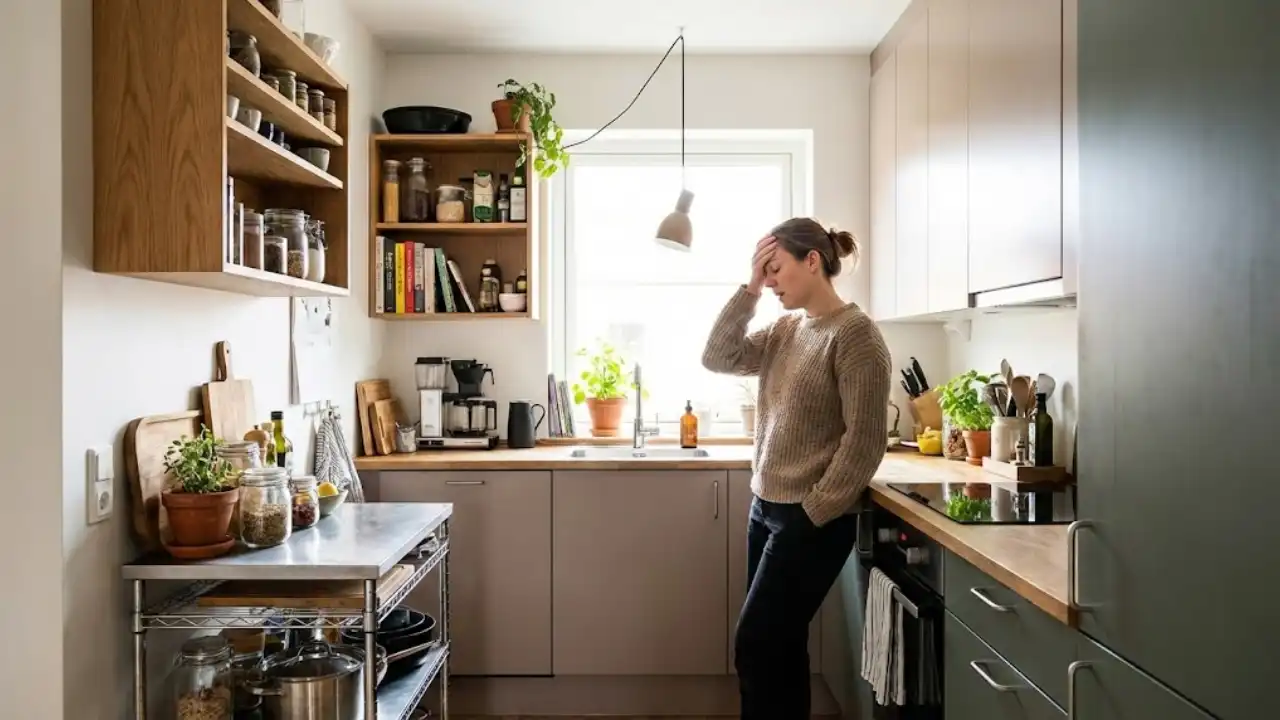
Sometimes, the prettiest kitchens just don’t work.
You open a drawer, and the cupboard behind you blocks it. Or there’s a fancy island, but now you’ve no space to move around. This happens more often than you think. And yes, even top designers make these mistakes. We’ve seen it all. And today, we’re sharing what goes wrong and how to fix it.
Small kitchen design mistakes
The biggest mistake? Trying to fit big ideas into small spaces.
Many kitchens look nice in magazines, but they don’t work in real homes. Things like oversized islands, poor layout, or bad lighting can make a small kitchen hard to use.
The Oversized Obsession: When Big Ideas Don’t Fit Small Spaces
One of the biggest mistakes designers make? They plan like space is unlimited.
They add huge kitchen islands, tall American-style fridges, or chunky range hoods, all things that look nice, but eat up space fast. In a small kitchen, this isn’t just unhelpful. It can make daily life harder. You end up squeezing sideways past cabinets or opening the fridge door into your knees. According to the UK’s national space standards, new homes must have internal layouts where every part is sized for practical use
What’s really needed is smart scaling. Not everything has to be tiny, but everything should fit your real space. For example, slimline appliances are a great choice for tight layouts. Same with wall-mounted storage or foldable breakfast tables.
Let me tell you a quick story.
A client once showed me a Pinterest kitchen with a massive marble island. She loved it. Her actual kitchen? A compact galley in a 1930s semi. The original designer had drawn in that island — and it looked great on paper. But when we tested it out, there was only 50cm of walking space left. That’s less than the width of most people’s shoulders! She was gutted.
So we changed direction. We added extra deep drawers instead of an island, moved her oven to eye level, and added a pull-out table under the window. She told me it was the first time her kitchen “just worked.”
The truth is: big features often get in the way.
In small kitchens, flow matters more than flash. Movement, light, and storage should guide the design — not just style alone.
Ignoring the Kitchen Triangle
You’ve probably heard the term “kitchen triangle” before. It’s a simple idea: your sink, cooker, and fridge should form a triangle. This layout helps you move smoothly while cooking, rinse at the sink, grab from the fridge, stir at the hob, without bumping into things.
But in many small kitchens, this triangle gets ignored. Designers either squash everything into a straight line or spread things too far apart. And when the triangle breaks, your daily tasks turn into a clumsy dance. You end up walking more than you cook.
Why the Triangle Matters
In compact kitchens — like those found in flats or small terraces — the triangle becomes even more important. You don’t have space to waste. Every step, every spin, every reach should feel easy.
- If the fridge is too far from the cooker, you’ll get tired just prepping dinner.
- If the sink is crammed in a corner, washing up becomes awkward.
- when appliances face each other, doors clash, and you’re stuck waiting for someone to move.
Good triangle planning means everything feels in the right place, even in tight quarters.
How Designers Get It Wrong
Some designers follow trends instead of function. They might place the oven on the far wall because it looks “balanced,” or push the fridge into a corner to keep the lines clean. On paper, it looks neat. In real life, you’re walking in circles with your hands full of veg or hot pans.
Another common mistake? Forgetting the real human using the space. You’re not a character in a glossy kitchen ad. You’re making school lunches, rushing out the door, tidying up after tea. The triangle isn’t just theory; it’s everyday comfort.
What to Do Instead
Start with the way you cook. Are you always back and forth from the fridge to the sink? Do you prep near the hob? Think about your habits, and design around them.
You don’t need a perfect triangle. But you do need one that works for your room. In a narrow galley kitchen, for example, you can still have that triangle, just stretched along two sides. In an L-shaped kitchen, angle things so you turn, not travel.
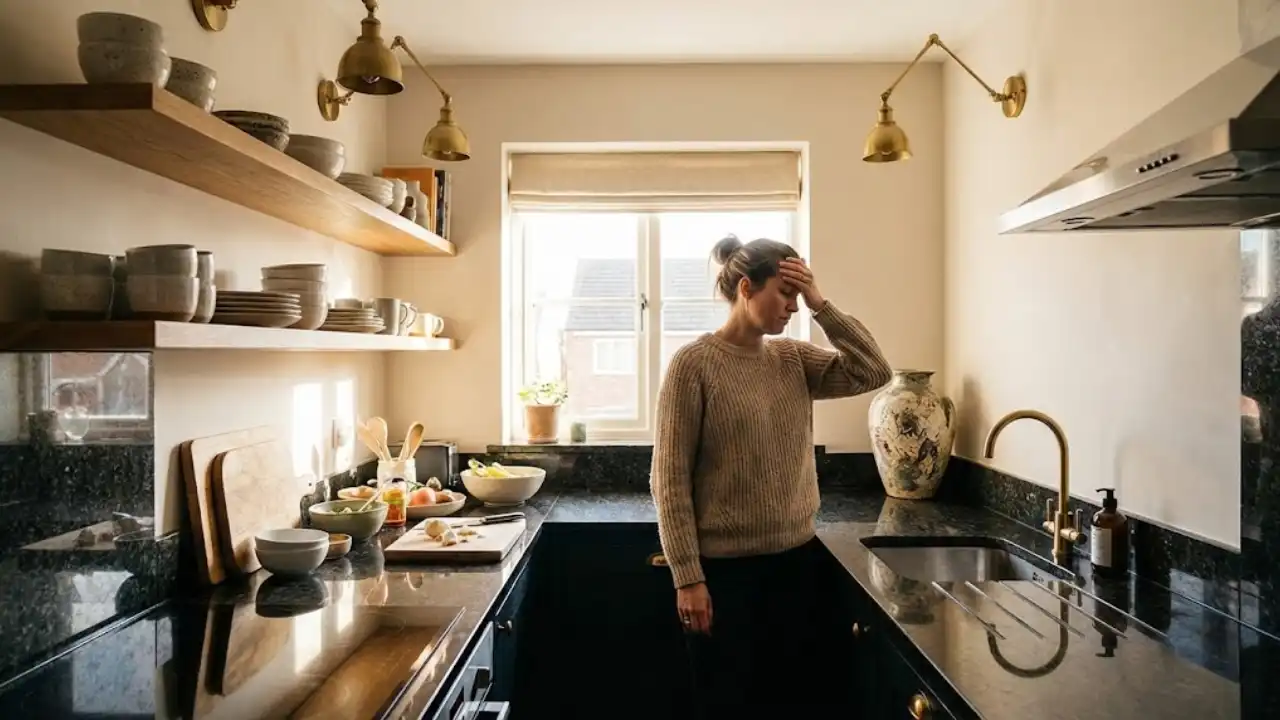
Also, allow space between zones, not too little, not too much. About 1.2 metres between opposite units is often ideal. Enough to move, but not so much that you’re doing laps.
One More Tip: Respect the Flow
Your kitchen isn’t just about cooking. It’s also about flow, where people walk, how doors open, where daylight hits. A well-planned triangle helps keep that flow natural.
If your sink faces the window, place the cooker close but not blocking it. If the fridge opens towards the hallway, make sure it doesn’t become a barrier. These little things make a big difference.
In short:
Don’t let layout rules become an afterthought. A broken triangle breaks your kitchen.
It might not sound flashy, but getting it right is one of the best ways to make a small kitchen feel calm, fast, and friendly to use.
Overlooking Vertical Potential and Ceiling Space
Most people think side-to-side when planning a kitchen. But in a small space, you’ve got to think up. A lot of designers forget this and leave valuable storage space unused.
Let’s fix that.
Why Vertical Space Matters
In small UK kitchens, like those in terraces or converted flats, floor space is tight. But your walls? They’re full of opportunity. Using the full height of the room can double your storage without making the room feel smaller.
Here’s how:
- Tall cupboards let you store items you don’t need every day (like slow cookers or baking trays).
- Wall-mounted shelves are great for things you grab often — mugs, spices, bowls.
- Häfele pull-down units can bring top-shelf storage to eye level.
- Even the back of a door can hold spice racks or foldable hooks.
A lot of designers skip this because it’s not “on trend.” But we’re here to make your kitchen work — not just look good in photos.
Smart Ceiling-Height Storage Options
The key is to blend closed and open storage so your kitchen doesn’t feel heavy. Go for slimline wall units that reach up, but break them up with open shelves or glass fronts.
Here’s a quick comparison:
| Storage Type | Best For | Good In Small Kitchens? |
| Open shelving | Daily items, displayware | ✅ Yes – if not overloaded |
| Ceiling-height units | Baking tins, dry goods, bulk storage | ✅ Very useful |
| Ladder storage racks | Hanging pans or utensils | ⚠️ Only with high ceilings |
| Pull-out towers | Tins, jars, and sauces | ✅ Great space-saver |
Watch Out for This Mistake
Some designers stop cupboards short to keep a “clean line.” But what happens? Dusty gaps. Wasted space. And a kitchen that could’ve held more, but doesn’t.
If your ceilings are high, use them. If they’re low, use clever hardware like Blum lift systems that make tall cupboards easy to open.
Prioritising Looks Over Everyday Function
Some kitchens are built to impress at first glance. Glossy surfaces, open shelves, statement taps, all very stylish. But here’s the thing: what looks good in a showroom doesn’t always work in a small home.
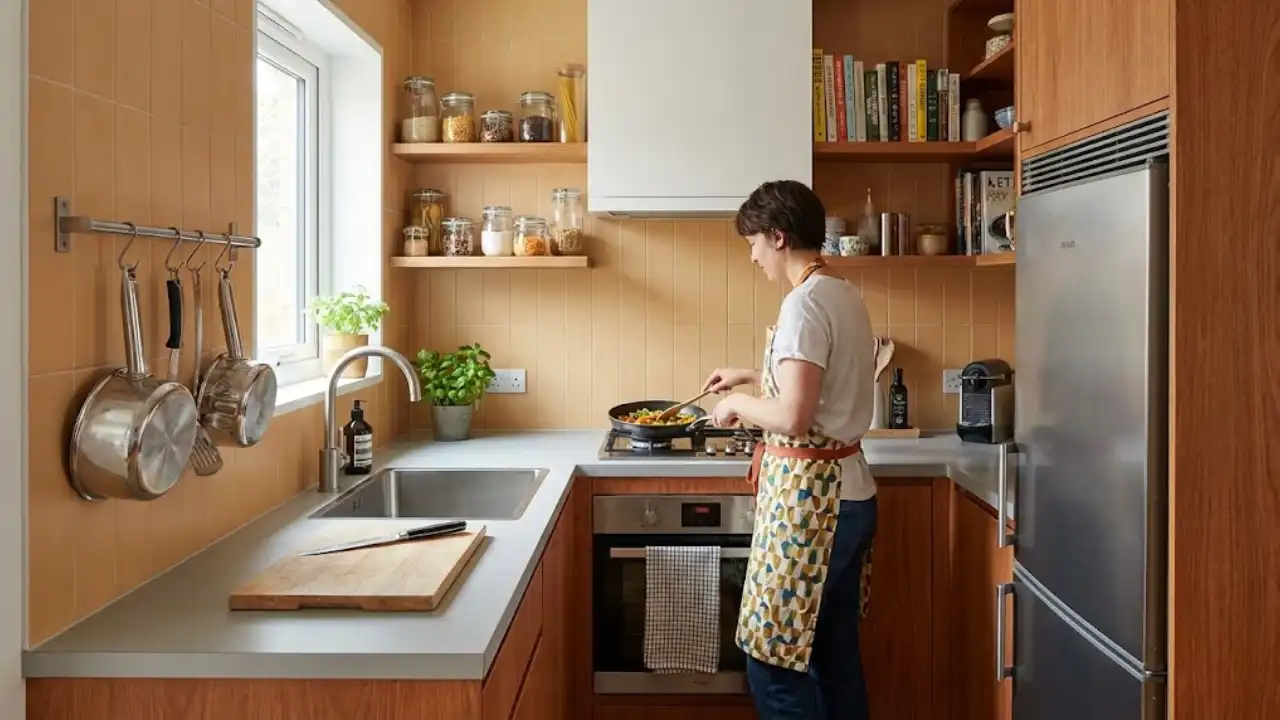
This is where some interior designers go wrong. They chase style points and forget how real people live.
Why Pretty Isn’t Always Practical
In small kitchens, function must come first. You need space to chop veg, store food, and clean up — without bumping elbows or knocking things over.
But sometimes designers focus too much on:
- Open shelving, which looks airy — but gathers dust and grease fast.
- Handleless cabinets, which look sleek — but are harder to open with wet or messy hands.
- Glossy worktops, which shine under lights — but show every fingerprint and crumb.
These choices may look great in magazines, but they can be frustrating in daily life — especially in compact kitchens.
Think Like a Real Cook
Ask yourself: what’s it like using this kitchen every day?
If you cook most nights, you’ll need:
- Durable, easy-to-clean surfaces like Duropal or Silestone.
- Closed cupboards to keep things clean and hidden.
- Task lighting that helps you see what you’re chopping, not just overhead bulbs.
And if space is tight, don’t choose a trendy layout just because it’s “in.” Go for what works — even if it’s not flashy.
Keep Style in the Right Places
Now, this doesn’t mean your kitchen has to be boring. You can still add:
- A bold splashback colour
- A few open shelves for mugs or plants
- A statement tap from Franke or Blanco
But those should come after the layout, storage, and lighting are sorted.
Final Thoughts
Small kitchens can be tricky, but they don’t have to be frustrating. When you plan with care, focus on flow, and skip the showy extras, even the tiniest space can feel smart, calm, and easy to use. The best kitchens aren’t the fanciest; they’re the ones that work for you.
Ready to rethink your kitchen design?
Get your free kitchen design quote in Wiltshire from Preston & Co — and let’s build a space that truly works for you.
FAQs
Q1: What is the biggest design mistake in a small UK kitchen?
Trying to fit too much in, like oversized islands or fridges, is the most common mistake. It eats up space and makes the kitchen hard to use. Always design for the room you have, not the room you wish you had.
Q2: How do I know if my kitchen is too small for an island?
If you don’t have at least 90 cm of clear space on all sides, it’s best to skip the island. In smaller kitchens, a slim breakfast bar or extra deep drawers can be a smarter choice.
Q3: What are better alternatives to open shelving in tight kitchens?
Closed cupboards are better for keeping things clean and tidy. If you want display space, try glass-front units or one small open shelf for everyday items like mugs or tea jars.
Q4: Can I still have a stylish kitchen in a compact space?
Yes, as long as function comes first. Use quality materials like Duropal worktops or Blanco taps, and keep the layout simple. A pop of colour or a stylish light fitting adds personality without clutter.
Q5: Do I need bespoke cabinetry for my small kitchen to work well?
Not always, but it can help. Bespoke cabinets make the most of every corner, especially in awkward or narrow rooms. If standard sizes don’t fit well, custom units can solve that.
